
Welcome to Frank’s Tangs – Tanganyika & Tropheus breeder in Nottingham, UK.
I’m a small, hobby-scale breeder specialising in rare Tropheus and other Lake Tanganyika cichlids. My focus is on healthy, tank-bred juveniles for serious UK hobbyists who want stable groups of Tropheus and authentic Tanganyikan community setups, and I often have carefully selected Tropheus for sale in the UK.
Main Fishroom
Main Fishroom #1
consists with smaller tanks for multiple Tanganyika and non-Tanganyika species
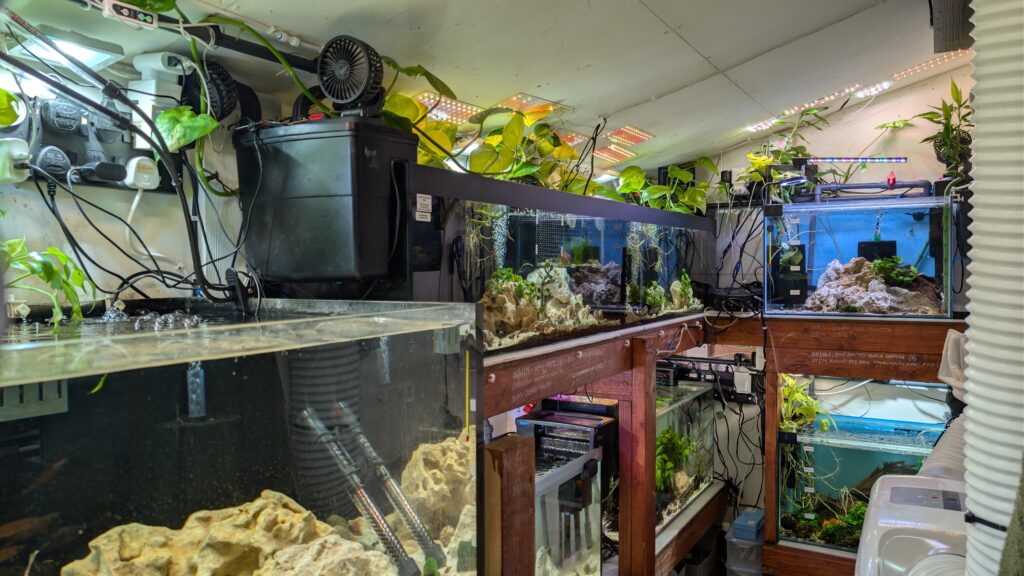
Main Fishroom #2
consists purely to facilitate breeding and growth of the Tropheus species

Aquascaping and creating biotopes is F U N
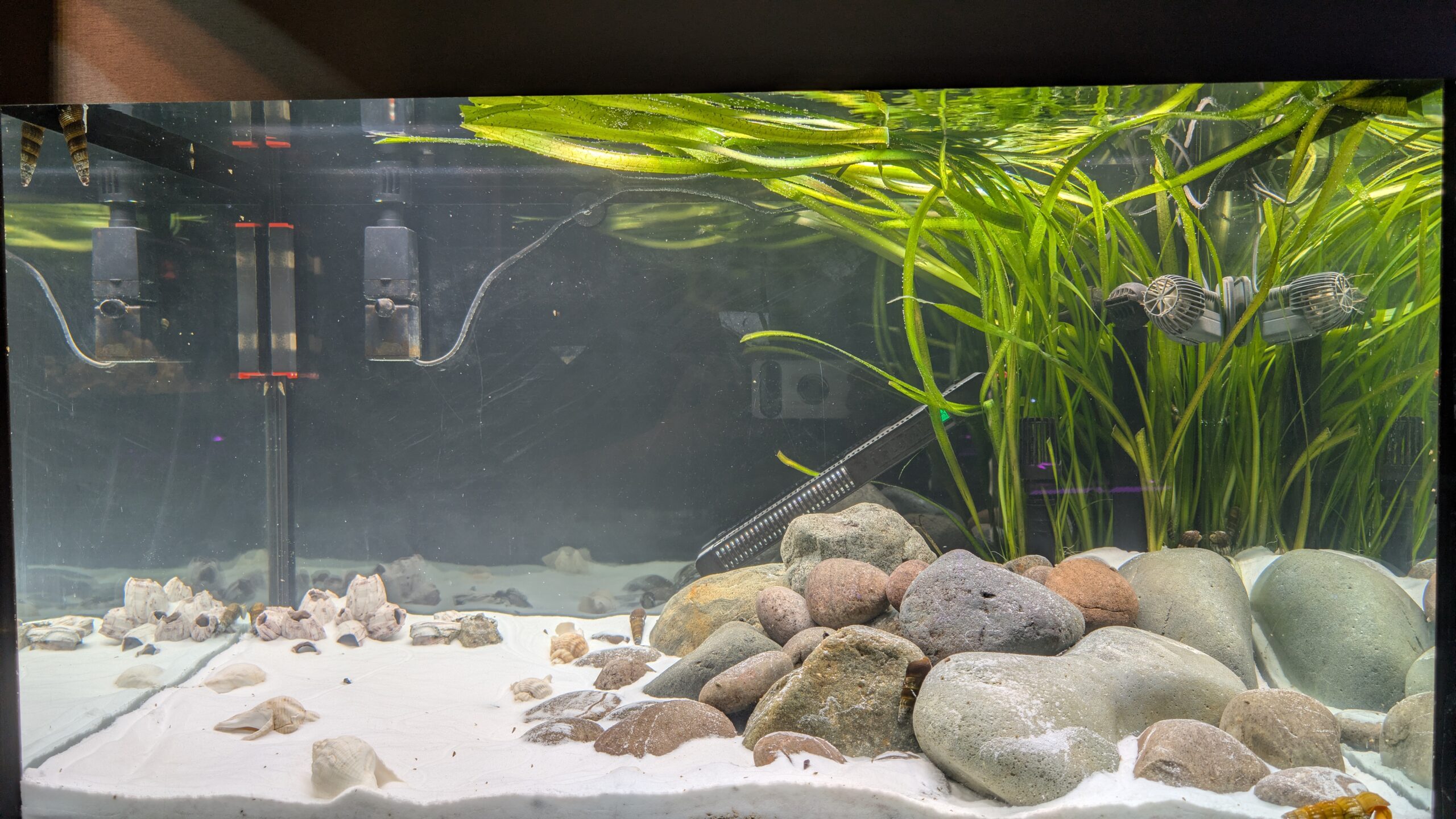
This aquarium recreates the tranquil transition habitat of northern Lake Tanganyika, where sandy flats meet gently sloping rocky shores covered with stands of Vallisneria. The fine white substrate and scattered shells mimic the soft carbonate sand of the lake’s littoral zone, while smooth boulders provide shelter and vertical breeding sites. A gentle current and crystal-clear water reflect the lake’s pristine conditions. Here, Xenotilapia flavipinnis sift the sand in small colonies, while Paracyprichromis brieni “Velifer” hover gracefully above the rock face, displaying shimmering blues and yellows beneath subdued daylight. The composition captures both the ecological balance and understated beauty of Tanganyika’s unique rock-sand interface, blending authenticity with visual harmony.
Northern Tanganyika Rock–Sand Interface Biotope – Vallis Zone by FranksTangs
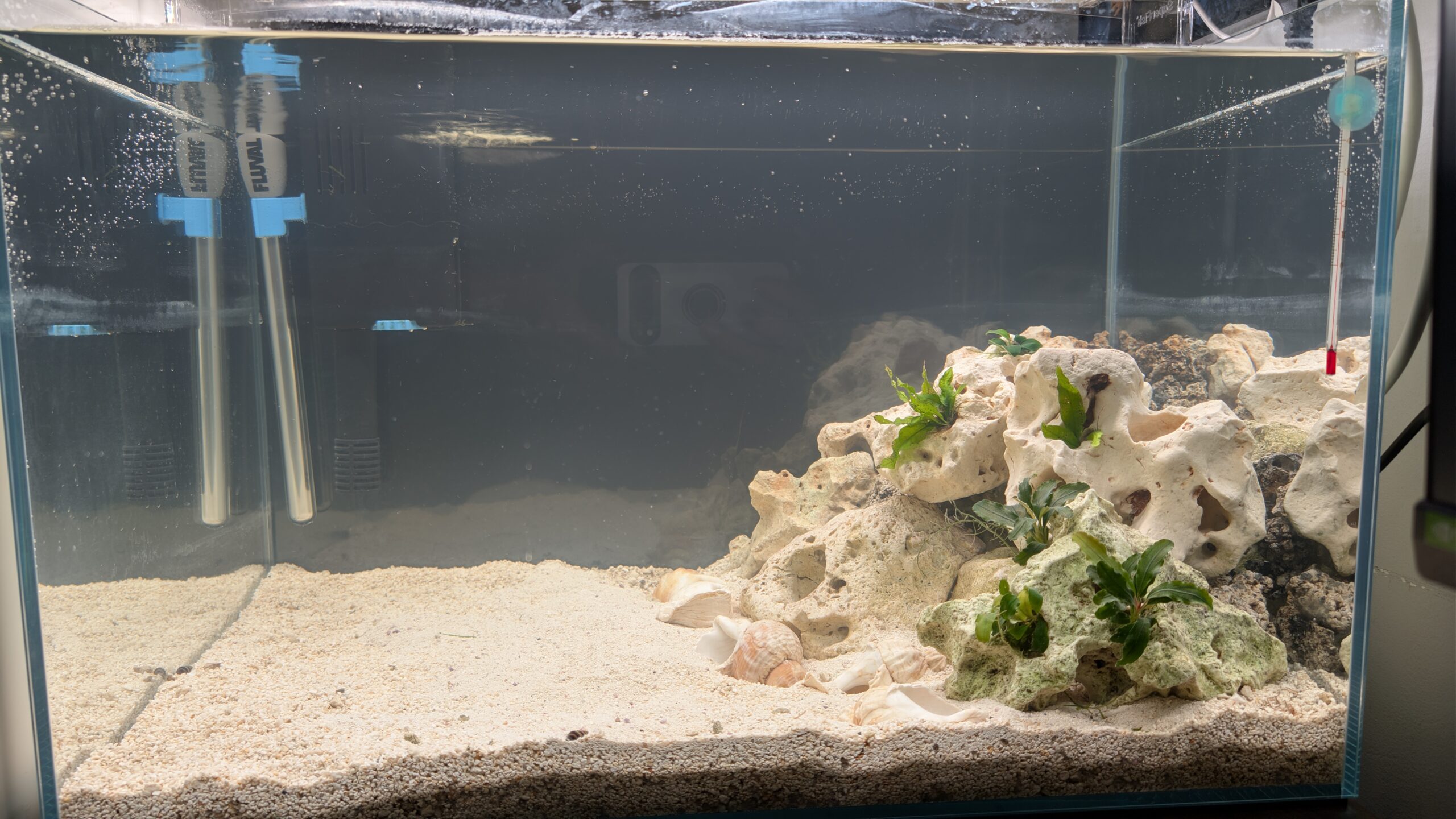
This aquascape recreates the natural rock–sand interface habitat of Neolamprologus kungweensis found along the northern shores of Lake Tanganyika, where steep, weathered limestone formations transition into open sandy flats. The layout features a stable, multi-layered cave structure formed from irregular carbonate rocks, providing deep crevices, shaded pockets, and overhangs identical to the species’ preferred spawning and territorial shelters. The surrounding substrate consists of fine pale aragonitic sand, naturally arranged into gentle slopes and open patches where males display, dig, and establish territory boundaries. Scattered larger shells are positioned near, but not inside, the primary rock structure—accurately reflecting the way empty snail shells accumulate in nature and serve as secondary refuges for females, subdominant individuals, and fry. A minimal selection of hardy, rock-attached plants (Anubias, Bucephalandra, and Java Fern) mimics the periphyton and algal growth commonly found on submerged stones in shallow Tanganyikan shores. The final composition blends ecological function with natural aesthetics, creating an authentic micro-biotope where N. kungweensis can exhibit their full repertoire of natural behaviours, including courtship, digging, territorial guarding, and fry rearing.
Rock–Sand Interface Biotope Style for Neolamprologus kungweensis (Northern Tanganyika Zone) by FranksTangs
If you’re specifically looking to buy Tropheus, visit my Tropheus for sale UK page for current stock and future projects.
© 2024 All Rights Reserved.